Statewide Concrete Repair — Colorado
Lifting & leveling Colorado concrete statewide
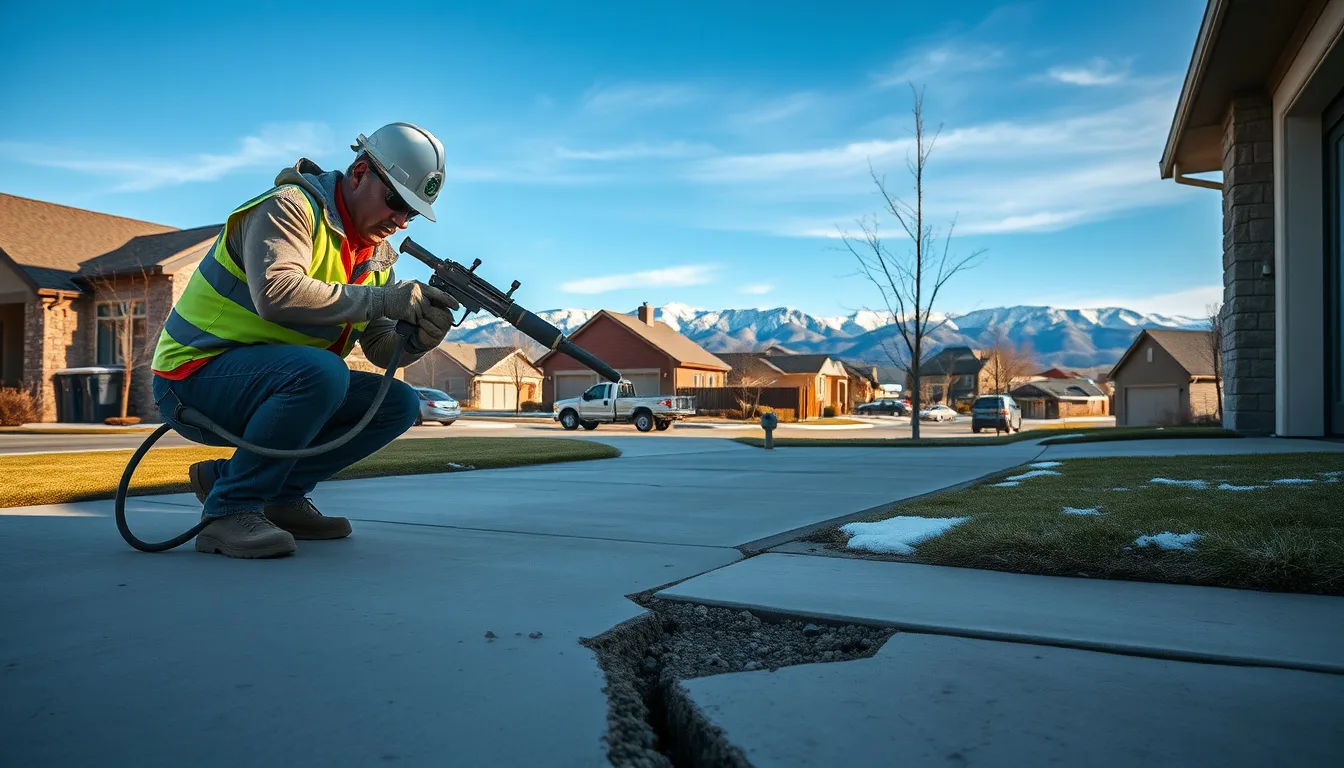
Crack injection, resurfacing, and polyurethane foam lifting for driveways, sidewalks, and patios across the Front Range — engineered for freeze-thaw cycling, de-icing salt, and expansive clay soil, not a generic national playbook.
149 freeze-thaw
cycles per year on the Front Range
2–6 in of heave
documented seasonal clay-soil movement
15-min foam cure
drive on it the same day
The Colorado Problem
Three mechanisms attack Front Range concrete at once
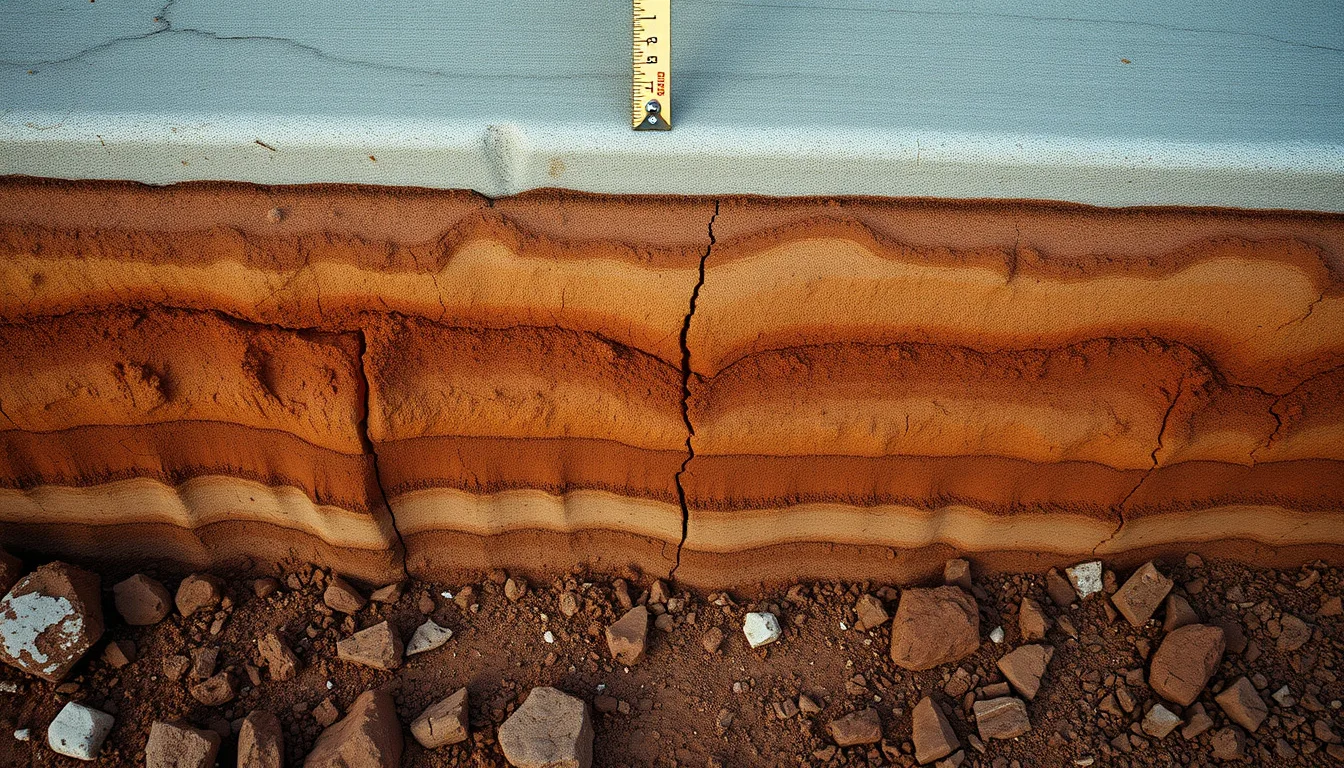
Colorado concrete doesn't fail the way it does in mild climates. Roughly 149 freeze-thaw cycles a year force water to expand and contract inside every micro-crack. Magnesium chloride de-icers accelerate surface scaling and corrode rebar from the inside out. And Pierre Shale/bentonite clay under most of the Front Range swells and shrinks seasonally — moving driveways and patios even when the house foundation stays solid on drilled piers.
- Freeze-thaw cycling: ice expands ~9% inside existing cracks, widening them every winter
- De-icing salt: magnesium chloride drives measurable scaling and rebar corrosion
- Expansive clay soil: 2–6 inches of documented seasonal ground movement
- Most real jobs are a combination of all three — diagnosis comes before repair
Pierre Shale & bentonite clay — the Front Range's signature soil
Know Your Options
Polyurethane foam vs mudjacking vs replacement
What we recommend
Polyurethane Foam
- $5–$25 / sq ft
- 15-minute cure
- 5/8" holes
- ~2 lb/cu ft — no soil reload
- Waterproof, effectively permanent
The traditional way
Mudjacking
- $3–$6 / sq ft
- 1–3 day cure
- 1–2" holes
- 100+ lb/cu ft on active clay
- Commonly needs redoing in 5–10 years
Last resort
Replacement
- Multiple times the cost of repair
- Days of demo + cure
- Full tear-out and re-pour
- Finish never matches
- Re-settles on the same active soil
Every Winter
De-icing salt does more damage than most homeowners realize
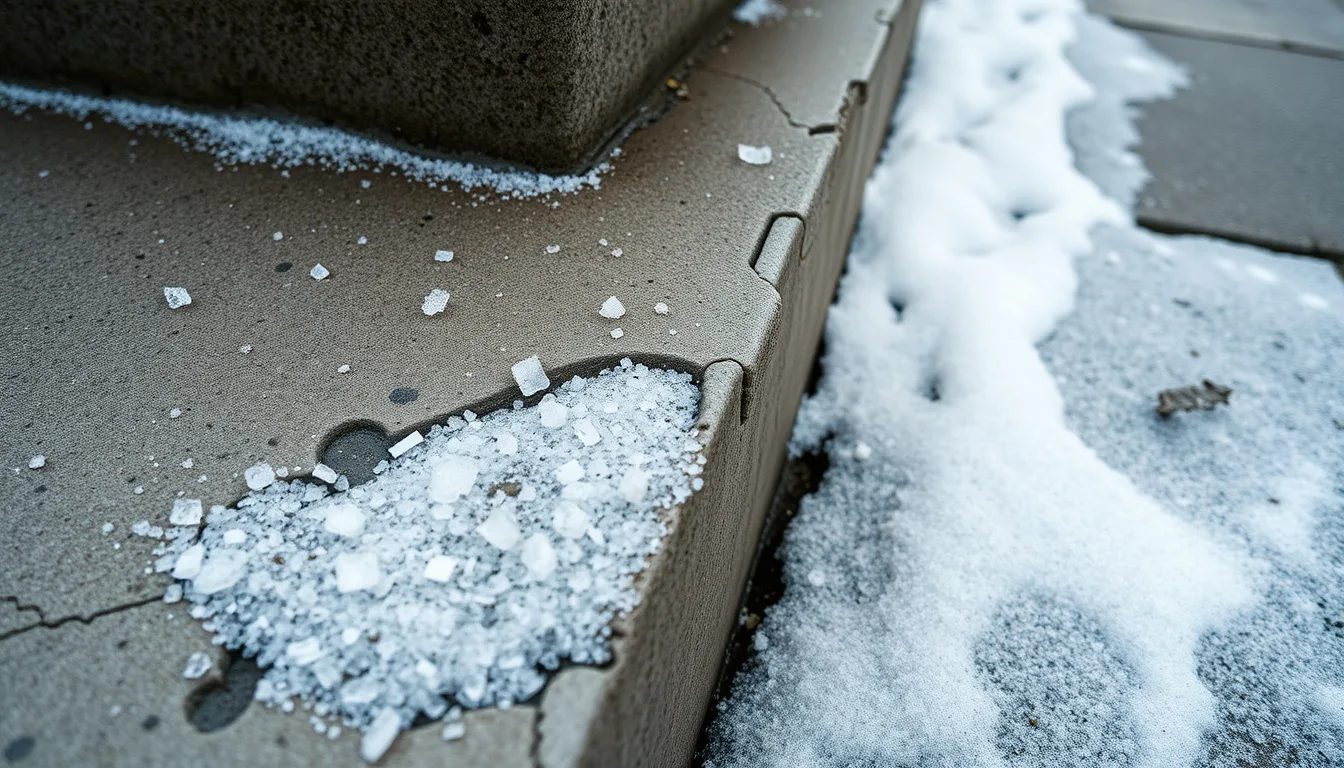
Magnesium and calcium chloride de-icers increase the water held inside concrete's pore structure, accelerating freeze-thaw scaling and corroding embedded rebar from the inside out. Driveways, sidewalks, and garage floors take the hit every winter — we catch it before it reaches structural spalling.
Spalling & Scaling RepairEngineered Solutions
Every repair, statewide
From a single hairline crack to a full commercial parking lot — if it's cracked, sunken, or salt-damaged, we diagnose the cause and fix it.
Precision Results
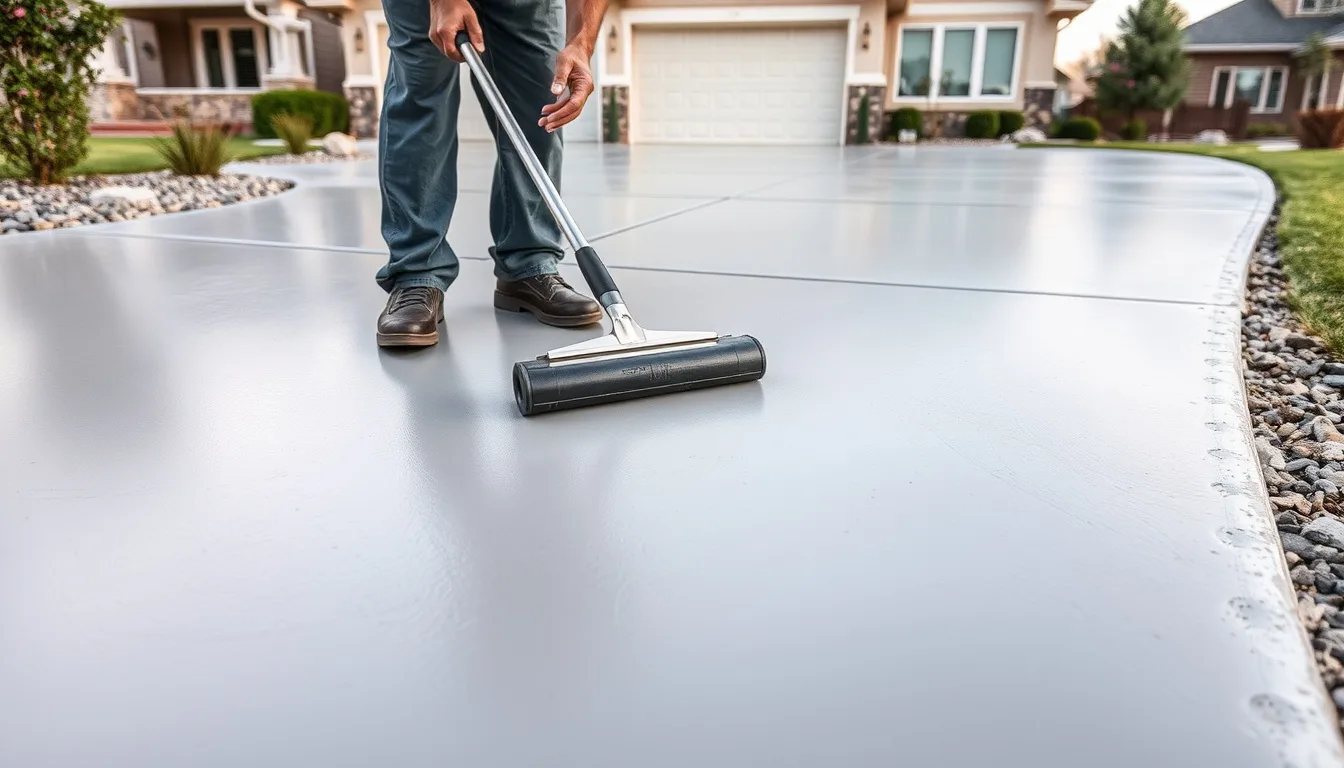
Diagnosed first, repaired to grade, documented in writing
Every job starts by identifying which of Colorado's three damage mechanisms is at work, maps the repair with levels before we drill or patch, and verifies the result against the surrounding slab. The goal isn't just a cosmetic fix — it's stopping the damage cycle that caused the problem in the first place.
- Cause diagnosis before any repair method is recommended
- Elevation mapping and controlled, monitored lifts
- Joint sealing and drainage correction on every job
- Before/after documentation in writing
Commercial, HOA & municipal: a 1/4-inch edge is legal exposure
ADA standards flag any vertical change of 1/4 inch or more as a trip hazard. Denver's 2022 Ordinance 307 shifted public sidewalk maintenance to the city, while Colorado Springs still holds owners liable for injuries even though the city maintains the walk — private driveways, patios, and walks stay the property owner's responsibility either way. We run survey-and-repair programs with dated correction logs that close the exposure before anyone gets hurt.
Statewide Dispatch
One crew network, all of Colorado
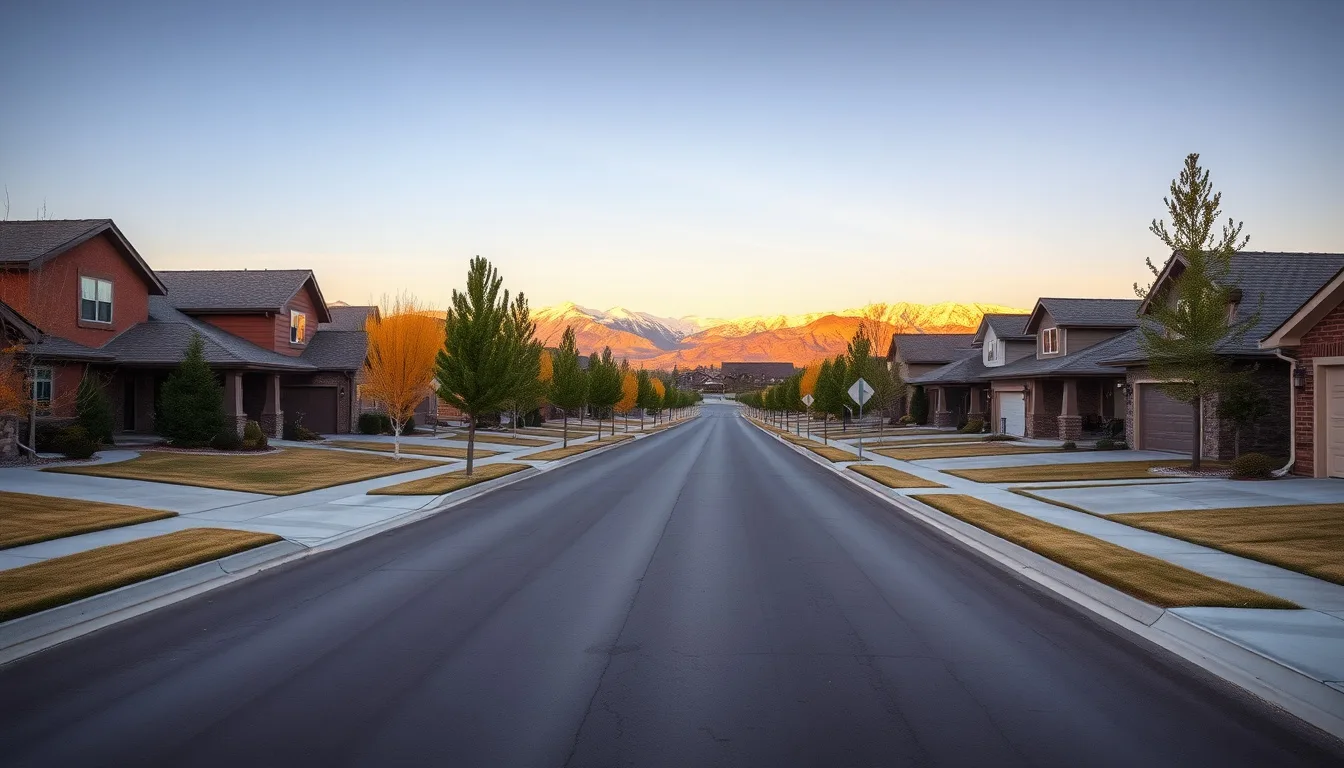
Denver metro daily. Colorado Springs, Fort Collins, Boulder, and Pueblo on regular routes — the mountain corridor by appointment.
The Process
Diagnosed, repaired, sealed — usually in a day
Diagnose the cause
Freeze-thaw, de-icing salt, expansive soil, or a combination — before any method is recommended.
Map the repair
Levels and elevation readings, void sounding, crack-width measurements on the affected slabs.
Repair or lift
Epoxy injection, resurfacing overlay, or polyurethane foam lifting matched to the diagnosis.
Seal & document
Joints sealed, drainage flagged, before/after measurements documented in writing.
Straight Answers
What Colorado asks before the drill comes out
Costs, methods, freeze-thaw, clay soil — the full FAQ hub covers 28 questions.
Browse All FAQsMost concrete repair projects run from a few hundred dollars for a single crack or patch up to several thousand for resurfacing or lifting a full driveway or patio — cost depends on the damage type, repair method, and square footage. We give a fixed price after an on-site inspection, not a phone-quote guess.
Mudjacking pumps a heavier cement slurry through 1-2 inch holes and needs 1-3 days to cure; polyurethane foam injects expanding foam through dime-sized holes and cures in about 15 minutes. On Colorado's expansive clay soil, foam's much lighter weight matters — it doesn't reload ground that's already unstable.
The Front Range averages around 149 freeze-thaw cycles a year, and magnesium chloride de-icers accelerate surface scaling and rebar corrosion. Add Pierre Shale and bentonite clay that swells and shrinks seasonally under nearly every driveway and patio, and Colorado concrete fails differently than almost anywhere else.
Almost always — crack injection, resurfacing, and lifting typically cost a fraction of full tear-out and replacement, and they preserve an existing finish that a fresh pour can't match. We'll tell you honestly when a slab is too far gone and replacement is the better value.
Yes — inspections and quotes are free across our statewide Colorado service area. We diagnose the actual cause of the damage before recommending a fixed-price repair, rather than quoting blind over the phone.
From the Blog
Concrete intelligence for Colorado ground
Cracked, sinking, or salt-damaged concrete? Get a fixed price before we drill.
Free inspections statewide. We diagnose freeze-thaw, de-icing salt, and expansive-soil causes before recommending a repair.